Travel planning · 22 min read
Lapland, Finland: The Complete Guide to Finnish Lapland
When to go, which resort suits you, how to get there, what it costs and what to pack — a practical, honest planning guide to Finnish Lapland, and to the Finland beyond it.
Written by The GoHappy Finland editorial team · Published · Updated
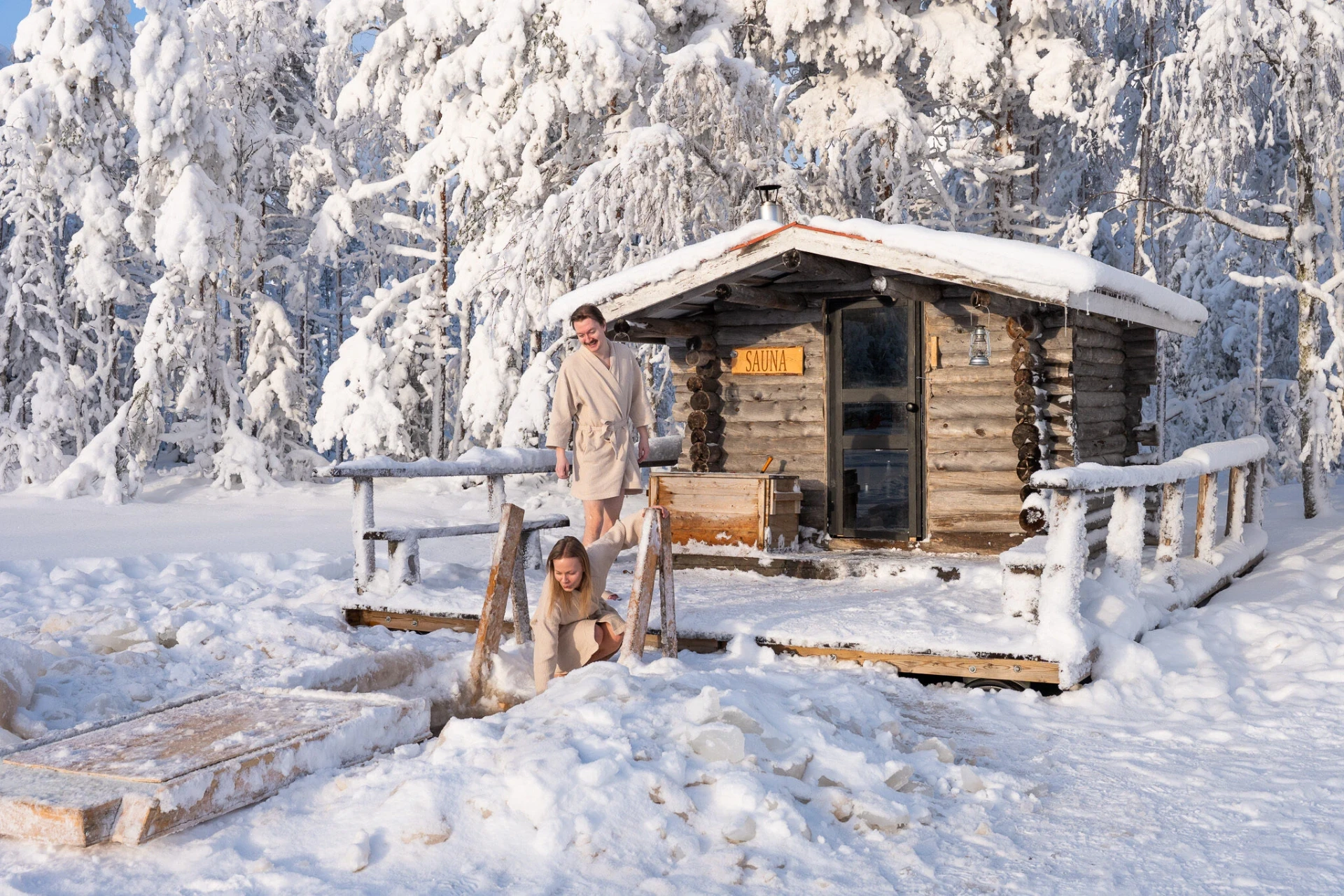
Lapland, Finland — usually called Finnish Lapland — is Finland's northernmost region: a vast, thinly populated land of forest, fells (rounded Arctic hills), rivers and lakes, most of it north of the Arctic Circle. It covers roughly a third of the country but is home to only a small share of its people. Rovaniemi is the regional capital; Levi, Ylläs, Saariselkä, Inari and Pyhä-Luosto are the other places most travellers plan around.
Most people come in winter, for snow, the chance of Northern Lights, husky and reindeer rides and Christmas with Santa Claus. Those are real reasons to go. But the moments travellers remember are often quieter: the silence of a snowy forest at minus fifteen, coffee by a campfire, the warmth of a wood-heated sauna after a day outside.
This guide is written for people actively planning a trip. It covers when to go, where to base yourself, how to get there, how many days you need, realistic cost ranges, what to pack and a sample itinerary — without promising snow, sunshine or auroras that nobody can guarantee. Come for Lapland. Discover Finland.
Where is Lapland, Finland?
Finnish Lapland is the far north of Finland, bordering Sweden to the west, Norway to the north and Russia to the east. The Arctic Circle crosses the region just north of Rovaniemi, around 800 kilometres north of Helsinki.
“Lapland” can be confusing because the wider Lapland area — the traditional homeland of the Sámi, Europe's only recognised Indigenous people — also stretches across northern Sweden, Norway and Russia's Kola Peninsula. When travellers say “Lapland Finland” or “Finland Lapland”, they almost always mean the Finnish region, also called Lappi in Finnish.
Within Finnish Lapland, distances are large. Rovaniemi to Inari is roughly 330 kilometres; Rovaniemi to Levi is about 170. Treat it like a small country rather than one destination, and choose a base that fits what you want to do.
| Area | Roughly where | Nearest airport |
|---|---|---|
| Rovaniemi | South Lapland, on the Arctic Circle | Rovaniemi |
| Levi | Western Lapland | Kittilä |
| Ylläs | Western Lapland, near Levi | Kittilä (or Kolari by train) |
| Pyhä-Luosto | Eastern Lapland | Rovaniemi |
| Saariselkä | Northern Lapland | Ivalo |
| Inari | Northern Lapland, by Lake Inari | Ivalo |
Why visit Finnish Lapland?
Because it is one of the few places in Europe where you can still experience real Arctic quiet within a few hours of a major city. Clean air, clear water, forests that run to the horizon and a culture built around coping cheerfully with the cold.
Finnish Lapland is also easy to travel in. Infrastructure works in deep winter, accommodation ranges from simple log cabins to glass-roofed suites, English is widely spoken and safety is high. You can design anything from a three-day Christmas break to a slow week of skiing, sauna and silence.
What sets Finland apart is everyday nature culture: the right to roam, saunas in almost every home and cottage, and the habit of simply being outdoors. That is the Lapland we suggest looking for — alongside the famous attractions, not instead of them.
Best time to visit Lapland
There is no single best time — it depends on what you want to see. The short answer: December to March for snow and winter activities, mid-December for Christmas, late February to March for longer days with snow, and September for autumn colours with a good chance of auroras before deep winter.
| If you want… | Consider | Keep in mind |
|---|---|---|
| Christmas & Santa | Late November–December | Highest prices; book early; short daylight |
| Northern Lights | September–March | Needs dark, clear skies; cloud is the main obstacle |
| Snow activities with daylight | Late February–March | Popular school-holiday weeks in Europe |
| Skiing | December–April | Snow conditions vary by year and resort |
| Midnight sun & hiking | Mid-June–August | Mosquitoes in midsummer, especially in wetter areas |
| Autumn colours (ruska) | Late August–mid-September | Short window; timing shifts each year |
| Fewer crowds | Early December, January, autumn | January is often the coldest month |
January and February are typically the coldest months. Temperatures around −10 to −20 °C are common, and colder spells below −30 °C can happen, especially inland and in the north. Good clothing matters more than the exact date.
Lapland by season
Lapland has more seasons than the usual four — locals often speak of eight. For planning, these four main seasons are what matter.
Winter and Christmas (December–February)
Snow, blue twilight and the classic Lapland experiences: huskies, reindeer, snowmobiles, skiing and Santa Claus. In the far north the sun stays below the horizon for weeks around midwinter (the polar night, or kaamos); in Rovaniemi it rises only briefly. Days are not pitch dark — the light is soft, blue and often beautiful — but plan outdoor activities around the midday hours.
December is the busiest and most expensive time. January is quieter and usually colder; February brings returning light and the first school-holiday peaks.
Spring winter (March–April)
Many locals' favourite season. Days lengthen quickly, the snow is often at its deepest and the sun returns to warm your face. This is excellent for cross-country skiing, snowshoeing and campfire lunches outdoors. Auroras are still possible in March on dark, clear nights. Snow conditions in late April depend strongly on the year and location.
Summer (June–August)
The midnight sun makes nights bright, and hiking, paddling, fishing and fell walking take over. Summer Lapland is green, quiet and far less visited than winter. Mosquitoes can be intense from around midsummer into July, especially near wetlands; good repellent and long sleeves help.
Autumn and ruska (late August–October)
Ruska — the autumn colour season — turns the fells red, orange and gold, usually from late August to mid-September in the north. It is one of the best times for hiking, and the returning darkness brings the first Northern Lights of the season. By October the colours have gone in Lapland, the first snow may fall, and it is a quiet in-between month.
Best places to visit in Finnish Lapland
Each base has a distinct character. Choose for your trip style rather than the most famous name.
| Destination | Best for | Feel |
|---|---|---|
| Rovaniemi | Short trips, Santa, first-timers, easy logistics | Small city with lots of tour choice |
| Levi | Skiing, restaurants, families who want everything nearby | Lively, compact resort village |
| Ylläs | Cross-country skiing, nature, a calmer pace | Two quiet villages around a big fell |
| Saariselkä | Wilderness access, auroras, hiking | Small resort next to a vast national park |
| Inari | Sámi culture, lakes, remoteness | Tiny village in the far north |
| Pyhä-Luosto | Peace, nature, couples and slow travel | Two small fell resorts in a national park |
Rovaniemi: the easiest first visit
Rovaniemi is the capital of Lapland and the best-connected place in the region, with an airport a few minutes from town and night trains from Helsinki. Santa Claus Village sits on the Arctic Circle just outside the centre. Rovaniemi suits short breaks, families with younger children and anyone who wants many activities to choose from. The trade-off: it is the busiest place in Lapland in December, and you need to leave town to find real darkness and silence.
Levi: lively resort life
Levi is one of Finland's biggest ski resorts, with slopes, restaurants, shops and accommodation within walking distance of each other. It is a good choice for downhill skiers, groups and families who want convenience and evening atmosphere. If you are looking for wilderness quiet, plan days out from Levi or consider Ylläs instead.
Ylläs: space and quiet
Ylläs is a large fell with two villages, Äkäslompolo and Ylläsjärvi, on the edge of Pallas-Yllästunturi National Park. It is known for extensive cross-country ski trails and a calmer, nature-first feel. Ideal for active couples and families who prefer forest to nightlife.
Saariselkä: gateway to the wilderness
Saariselkä is a small resort in northern Lapland next to Urho Kekkonen National Park, one of Finland's largest protected areas. Light pollution is low and the surrounding fells are open, which helps aurora watching. It suits travellers who want hiking, skiing and wilderness atmosphere with comfortable accommodation.
Inari: Sámi culture and the far north
Inari is a small village on the shore of Lake Inari and an important centre of Sámi culture, home to the Siida museum and nature centre and the Sámi cultural centre Sajos. It is remote, peaceful and best for travellers who are curious about culture and comfortable with fewer services. Combine it with nearby Saariselkä for more activity choice.
Pyhä-Luosto: slow Lapland
Pyhä and Luosto are two small fell resorts linked by Pyhä-Luosto National Park, a couple of hours from Rovaniemi. Expect quiet trails, smaller crowds and a relaxed pace — good for couples, slow travellers and families who want a calmer alternative to the larger resorts.
Best things to do in Lapland
The best Lapland trips mix one or two signature experiences with plenty of unscheduled time outdoors. Booking an activity every day is the most common mistake.
- Husky safari — from a short taster ride to a multi-day trek; check how the operator cares for its dogs.
- Reindeer farm visit or sleigh ride — often run by local reindeer herding families.
- Snowmobile safari — fast and fun; a driving licence is required to drive in Finland.
- Cross-country skiing and snowshoeing — the most Finnish way to move through a winter forest.
- Downhill skiing at Levi, Ylläs, Pyhä, Luosto, Saariselkä and other fells.
- Aurora hunting — guided or on your own, away from lights.
- Sauna, and if you dare, a dip in an ice hole.
- Campfire lunch in a lean-to shelter (laavu) with sausages and coffee boiled over the fire.
- Sámi culture at Siida in Inari, and Arktikum in Rovaniemi for Arctic science and history.
- Summer and autumn: hiking, paddling, berry picking and fishing under the midnight sun.
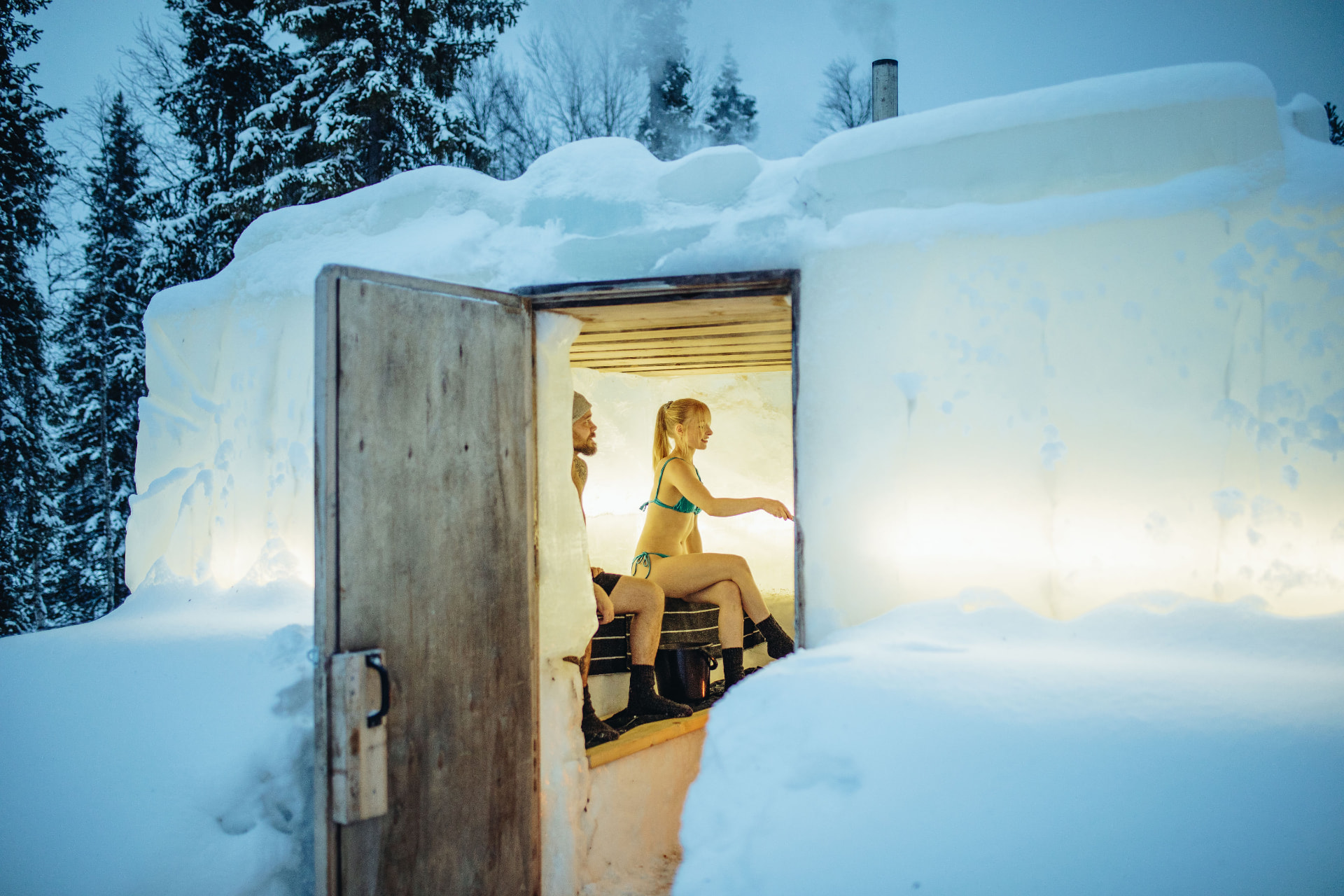
Northern Lights in Lapland
Finnish Lapland is one of the most accessible places in the world to look for the aurora borealis. In the north they can appear on a large share of clear, dark nights during the season — but no one can promise you will see them on a particular trip.
What you need: darkness (roughly late August to early April), clear skies and some solar activity. Cloud is the most common reason people miss them. Your best tactics are to stay at least four nights, base yourself away from bright lights, check aurora and cloud forecasts in the evening, and be ready to go outside late — activity often peaks around 21:00–01:00 but can happen at any time of darkness.
Glass-roofed cabins are lovely but optional. A dark lakeshore or open fell a short walk from your accommodation works just as well, and a guided aurora trip can help by driving to wherever the sky is clearest.
Planning around the aurora?
Our Lapland and Northern Lights experience is built around dark skies, quiet stays and flexible evenings.
See the Lapland Northern Lights experienceLapland with children
Lapland is one of Europe's most rewarding family winter destinations — if you plan for the cold and keep the pace slow. Children usually love the simple things most: sledging, building snow lanterns, feeding reindeer and hot juice by a campfire.
Practical tips: choose a base with short transfers (Rovaniemi and Levi are easiest), book accommodation with a drying room or space to dry clothes, keep activities short for younger children, and check minimum ages for husky and snowmobile safaris — children usually ride in a sledge rather than drive. Many operators provide thermal overalls and boots, but confirm sizes for small children in advance.
Santa Claus and Christmas in Lapland
Rovaniemi promotes itself as the official hometown of Santa Claus. Santa Claus Village on the Arctic Circle is open all year, with Santa's office, the Santa Claus Main Post Office and plenty of shops and activities. Visiting the village is free; meeting Santa in his office is free, while official photos are paid.
Lapland Finland at Christmas is magical, but popular. December dates — especially the weeks before Christmas — sell out early and cost the most. For a calmer experience, consider late November, early December or January, and stay outside the busiest areas.
Some families prefer something more personal: a private Santa visit to their own cabin. It is a quiet alternative to queues, especially with small children.
What if Santa comes to you?
A private Santa visit at your accommodation, planned around your family.
See the Private Santa ExperienceWhere to stay in Lapland
Where you sleep shapes your whole trip. The main options:
| Type | Good for | Trade-off |
|---|---|---|
| Log cabin or cottage | Families, groups, privacy, own sauna | Often need a car; self-catering |
| Hotel in town or resort | Short stays, convenience, restaurants | Less wilderness feel |
| Glass igloo or aurora cabin | A special night or two | High price; aurora not guaranteed |
| Wilderness lodge | Quiet, guided activities included | Remote; fewer choices |
| Apartment in a ski resort | Skiers, longer stays | Busy in peak weeks |
Our honest suggestion for most travellers: a cabin with its own sauna, a little outside the busiest area. One or two nights in a glass-roofed room can be a highlight, but the rest of the week is often better spent somewhere with space, a kitchen and a sauna.
How to get to Lapland
Most international travellers reach Finnish Lapland by flying, usually via Helsinki. The main airports are Rovaniemi (for Rovaniemi and Pyhä-Luosto), Kittilä (for Levi and Ylläs) and Ivalo (for Saariselkä and Inari), with smaller airports such as Kemi-Tornio and Enontekiö. Domestic flights from Helsinki take around 1 hour 15 to 1 hour 40 minutes.
From the UK and many European countries, seasonal direct winter flights and package charters to Lapland airports often operate, alongside year-round connections via Helsinki. Schedules change every season, so check current routes when you book.
From the US and Canada, the usual route is a transatlantic flight to Helsinki or another European hub, then a connection north. Building in an overnight stop in Helsinki can make jet lag easier and lets you see the capital.
By train: VR's overnight trains run from Helsinki to Rovaniemi (and to Kolari for Ylläs and Levi), with sleeper cabins and car transport on some services. It is a memorable, lower-carbon way to arrive. Long-distance buses connect onward to the resorts.
Getting around Lapland
Inside resorts and Rovaniemi you can manage without a car using airport transfers, shuttles, taxis and tour pick-ups. To explore more widely, a rental car gives the most freedom, but winter driving means snow, ice, darkness and reindeer on the roads — drive slowly and only if you are comfortable. Rental cars in Finland come with winter tyres in the winter season.
Long-distance buses link airports, towns and resorts, though services can be infrequent. Many activity providers include transport from your accommodation, which can make a car unnecessary on a shorter trip.
How many days do you need in Lapland?
For most first visits, 4–7 nights is the sweet spot. It gives you time for activities, rest days and several chances at clear skies.
| Trip length | What works | Best base |
|---|---|---|
| 3 days | One or two signature activities, Santa Claus Village, one aurora evening | Rovaniemi |
| 5 days | Huskies or reindeer, a day of skiing or snowshoeing, sauna, several aurora chances | Rovaniemi, Levi or Ylläs |
| 7 days | Two bases or one slow base, a wilderness day, rest, culture, multiple aurora nights | Combine Rovaniemi with Saariselkä/Inari or Pyhä-Luosto |
If you can, add a few days elsewhere in Finland — Helsinki on the way in, or a lakeside cottage on the way out.
How much does a Lapland trip cost?
Lapland is one of Finland's more expensive regions, especially in December. Costs depend far more on dates, accommodation and the number of guided activities than on anything else. The figures below are rough planning estimates, not quotes or researched market averages.
| Item | Rough planning estimate | Notes |
|---|---|---|
| Cabin or hotel per night | €120–400+ | Much higher for glass igloos and Christmas week |
| Guided activity per adult | €100–250+ | Husky, reindeer, snowmobile or aurora trips; multi-hour safaris cost more |
| Meals per person per day | €40–90 | Lower if self-catering in a cabin |
| Domestic flight or night train | Varies widely | Book early for December |
As a very rough guide, a week in Lapland in winter for two adults with a few guided activities often totals several thousand euros before international flights. Christmas dates can cost significantly more; March and January usually less. Add a 10–15% buffer for extras.
What to wear and pack for Lapland
The secret is layers, not one enormous coat. Cotton keeps moisture; wool and synthetic fabrics keep you warm.
- Base layer: merino wool or synthetic long underwear (top and bottom).
- Mid layer: wool jumper or fleece; a second layer for very cold days.
- Outer layer: windproof, insulated jacket and trousers.
- Warm winter boots with room for thick socks, and two or three pairs of wool socks.
- Mittens (warmer than gloves) plus thin liner gloves; a hat covering your ears; a neck gaiter or scarf.
- Headlamp, lip balm, rich moisturiser, sunglasses for spring snow.
- A swimsuit for sauna and spas.
- Summer: layers, rain jacket, sturdy shoes and mosquito repellent.
Many safari operators lend thermal overalls, boots and mittens for their activities. They do not cover the rest of your trip, so bring your own warm layers.
Suggested 5–7 day Lapland itinerary
An example only — adapt it to your dates, weather and energy. The rhythm matters more than the exact activities.
Day 1
Arrive in Rovaniemi. Short walk along the river, sauna, early night. Check the aurora forecast.
Day 2
Santa Claus Village and the Arctic Circle in the morning; Arktikum in the afternoon.
Day 3
Husky or reindeer experience. Evening aurora outing away from city lights.
Day 4
Transfer to a quieter base such as Pyhä-Luosto, Saariselkä or Ylläs. Settle into a cabin with sauna.
Day 5
Snowshoeing or cross-country skiing, campfire lunch in a lean-to, slow evening.
Day 6
Free day: downhill skiing, a cultural visit (Siida in Inari if you are in the north) or simply rest.
Day 7
Last sauna and breakfast, return flight — or continue south to discover more of Finland.
Beyond Lapland: discover the rest of Finland
Lapland may be what brings you to Finland. But it doesn't have to be where your Finnish story ends.
South of the Arctic Circle lies a different Finland: tens of thousands of lakes, lakeside cottages with wood-heated saunas, forest silence, campfire food and a slower everyday rhythm. In summer that means swimming and midnight light at a cottage; in autumn and winter, it means sauna, quiet waterways and cosy evenings — with far fewer visitors than Lapland.
Many travellers combine a few days in Lapland with Helsinki or the Finnish Lakeland. It is the best way to see how Finns really live.
Plan your Lapland trip with us
Tell us your rough dates, who is travelling and what matters most to you. We'll reply with honest Lapland — and beyond-Lapland — options that suit you.
No commitment. Availability, prices and details are always confirmed individually.
Frequently asked questions
- Where is Lapland in Finland?
- Finnish Lapland is Finland's northernmost region, bordering Sweden, Norway and Russia. Most of it lies north of the Arctic Circle; its capital, Rovaniemi, is about 800 km north of Helsinki.
- What is the best month to visit Lapland, Finland?
- It depends on your goal: December for Christmas, February–March for snow with more daylight, September–March for Northern Lights, and late August–September for autumn colours. March is a strong all-round choice for winter activities.
- Is Lapland in Finland or Norway?
- Both, in a sense. The wider Lapland area spans northern Norway, Sweden, Finland and Russia's Kola Peninsula. “Lapland Finland” refers to the Finnish region, Lappi, where Rovaniemi, Levi and Saariselkä are located.
- How do I get to Lapland from the UK or US?
- From the UK, look for seasonal direct winter flights to Rovaniemi or Kittilä, or connect via Helsinki. From the US, fly to Helsinki or another European hub and connect to a Lapland airport, or take the overnight train from Helsinki.
- How many days do you need in Lapland?
- Four to seven nights suits most first visits. Three days is enough for Rovaniemi highlights; five to seven days gives you rest, more activities and several chances to see the Northern Lights.
- Can you see the Northern Lights in Lapland?
- Yes, on dark and clear nights from roughly late August to early April, but sightings are never guaranteed. Staying several nights away from bright lights gives you the best chance.
- Is Lapland expensive?
- It is one of Finland's pricier regions, especially in December. Costs depend mainly on dates, accommodation and guided activities; self-catering cabins and January or March dates reduce costs.
- Is Rovaniemi or Levi better?
- Rovaniemi is better for short trips, Santa Claus Village and easy logistics. Levi is better for skiing and resort life with everything within walking distance. For more quiet, consider Ylläs, Saariselkä or Pyhä-Luosto.
Come for Lapland. Discover Finland.
Combine the Arctic with lakes, sauna and everyday Finnish life — we'll help you shape the trip.
Start planningGet the Finland Summer Starter Guide
Join the list and we will send Finland travel tips as we publish them — and the starter guide as soon as it is ready.